BOOKS ABOUT SPIRITUALITY AND THE EXPERIENCE OF FAITH
Listed alphabetically by author’s last name. (Click on the blue circle at the right to open and close the book description.)
THE LIVES WE ACTUALLY HAVE by Kate Bowler and Jessica Richie (2023, Convergent Books)
 Recommended by Ann Carlson
“Kate Bowler and Jessica Richie offer creative, faith-based blessings that center gratitude and hope while acknowledging our real, messy lives. Formatted like a prayer book, The Lives We Actually Have is an oasis and a landing spot for weary souls, with blessings that focus on the full range of human moments: garbage days, lovely days, grief-stricken days, and even (especially) completely ordinary days. These heartfelt blessings are a chance to exhale when we feel everything from careworn to restless, devastated to bored. Let’s have a reminder that we don’t need to wait for perfect lives when we can bless the lives we actually have.” (from the publisher)
Although generally based in the Christian tradition, this book offers heartfelt, relatable blessings to anyone who believes in prayer, petition, and praise. The many blessings themselves are revelatory, but I found the introduction particularly compelling. I have often wondered just exactly what a “blessing” is. Why are blessings so important in so many of our traditions, what do we do, exactly, in the act of blessing or receive in the act of being blessed? Bowler tells us that “the act of blessing is the strange and vital work of noticing what is true about God and ourselves. … Blessings put our spiritual house in order.” I am finding much to contemplate in that thought.
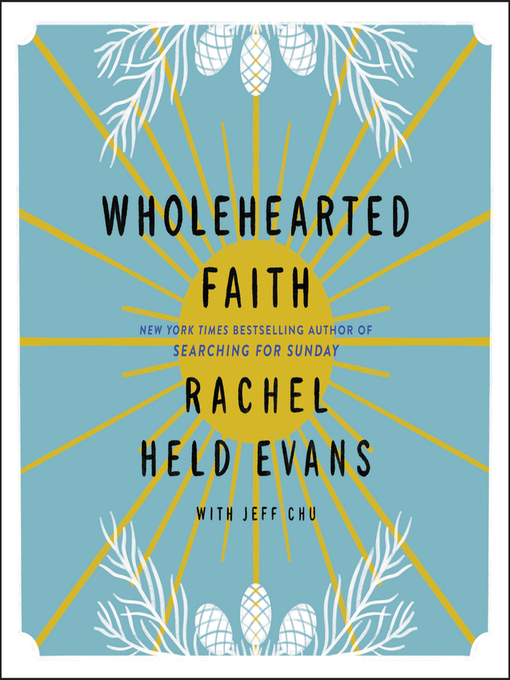
WHOLEHEARTED FAITH by Rachel Held Evans, with Jeff Chu. (2021, Harper Collins)
 Recommended by Tom Julius
At the time of her tragic death in 2019, Christian public theologian Rachel Held Evans was working on a new book about wholeheartedness. With the help of her close friend, author Jeff Chu, that work-in-progress, woven together with other unpublished writings, is now the foundation for this rich collection of essays that ask candid questions about the stories we’ve been told—and the stories we tell—about our faith, our selves, and our world.
This book is for the doubter and the dreamer, the seeker and the sojourner, those who long for a sense of spiritual wholeness. Through theological reflection and personal recollection, Rachel wrestles with God’s grace and love in an imperfect world, looks unsparingly at what the Church is and does, and explores universal human questions about becoming and belonging. (book jacket)
Faith gives people language and stories with which to draw meaning from their experiences, to see their lives as part of a larger narrative of wholeness and healing. At its best, faith teaches us to live without certainty and to hope without guarantee… At its best faith teaches us to take risks. (p. 22)
I belong to God’s creation, to this glorious collection of cells and microbes, trees and flowers, oceans and mountains, forests and fields. I also appreciate its candor: death is part of life. We need to make time and space not just to acknowledge that reality but also to celebrate it and to grieve it and to wrestle with it and to meditate on it. In doing so, we will recall a central truth: we are not alone. All of humanity has had to confront this reality – even Jesus himself. And the crucial thing to remember is that with God, death is never the end of the story. (p.103)
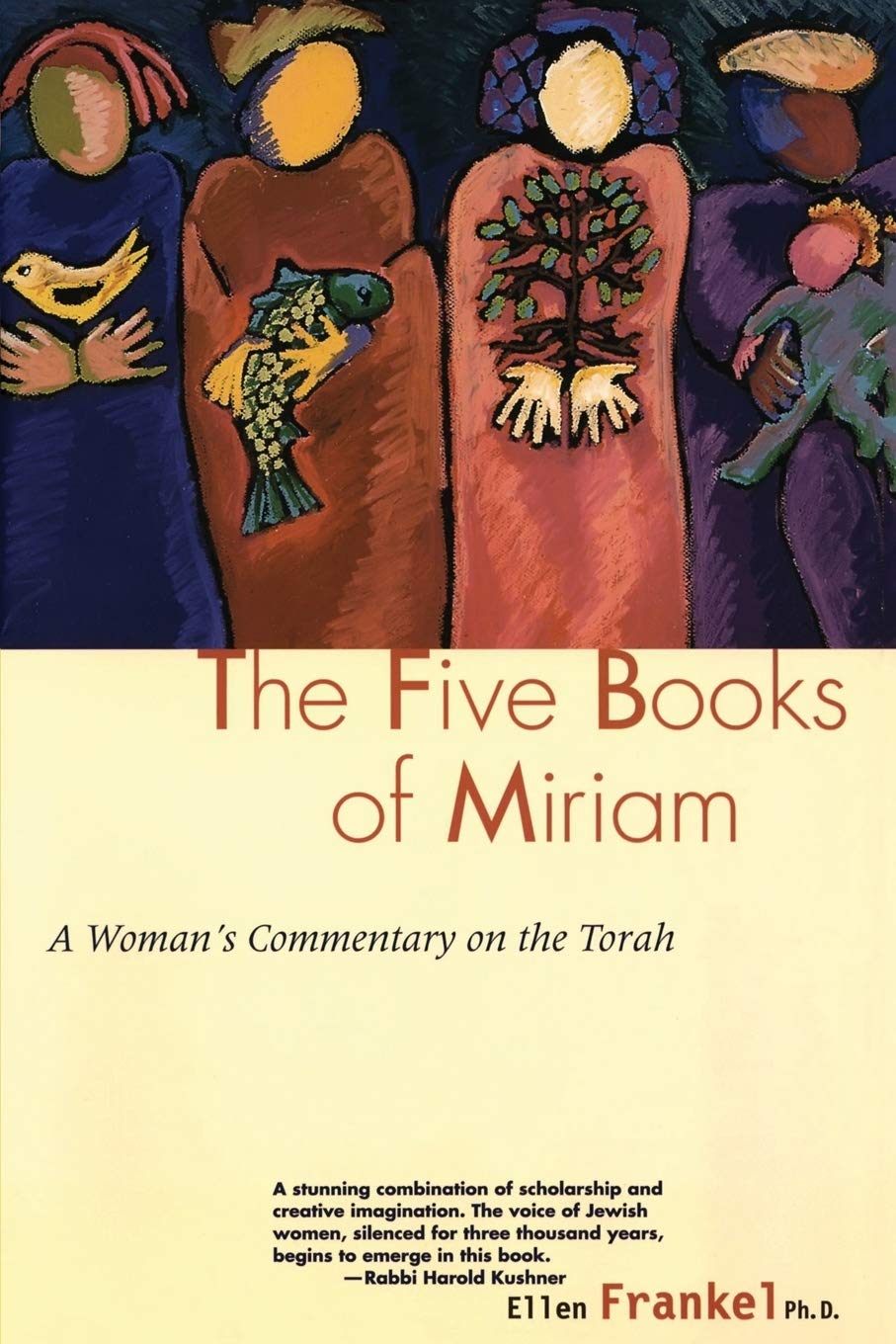
THE FIVE BOOKS OF MIRIAM: A WOMAN'S COMMENTARY ON THE TORAH by Ellen Frankel, Ph.D. (1996, HarperOne)
 Recommended by Ann Carlson
From the book jacket: Weaving together Jewish lore, the voices of Jewish foremothers, Yiddish fable, midrash, and stories of her own imagining, Ellen Frankel has created in this book a breathtakingly vivid exploration into what the Torah means to women. Here are Miriam, Esther, Dinah, Lilith, and many other women of the Torah in dialogue with Jewish daughters, mothers, and grandmothers, past and present. Together these voices examine and debate every aspect of a Jewish woman’s life—work, sex, marriage, her connection to God, and her place in Jewish community and the world.
What can I say? My favorite professor at seminary was an Orthodox Jewish woman. Several of the other women whom I have admired the most, and learned the most from, were proudly Jewish. I wanted to understand the tradition from their perspective, and got directed to this lovely and intriguing book. Truly worth reading.
CREATING TRUE PEACE: ENDING VIOLENCE IN YOURSELF, YOUR COMMUNITY, AND THE WORLD, by Thich Nhat Hanh. (2003, Free Press)
 Recommended by Ann Carlson
The world’s crises cause anxiety and a sense of urgency that can deflect us from the source of our grounding, and rob us of strength and resiliency. This book can help us to refocus.
“Creating True Peace is both a profound work of spiritual guidance and a practical blueprint for inner and global change. It is the Venerable Thich Nhat Hanh’s answer to our deep-rooted crisis of violence and our feeling of helplessness, victimization, and fear. … Thich Nhat Hanh uses a beautiful blend of visionary insight, inspiring stories of peacemaking, and a combination of meditation practices and instruction to show us how to take Right Action. A book for people of all faiths, it is a magnum opus — a compendium of peace practices that can help anyone practice nonviolent thought and behavior, even in the midst of world upheaval” – book jacket
How can we as individuals influence the collective consciousness of our nations and move in the direction of peace? We do this by uprooting the roots of violence and war within ourselves. To prevent war, we cultivate nonviolence. We practice mindfulness in our daily life so that we can recognize and transform the poisons within us and our nation. When we practice nonviolence in our daily life, we see the positive effects on our families, society, and government.” (pp 184-185)
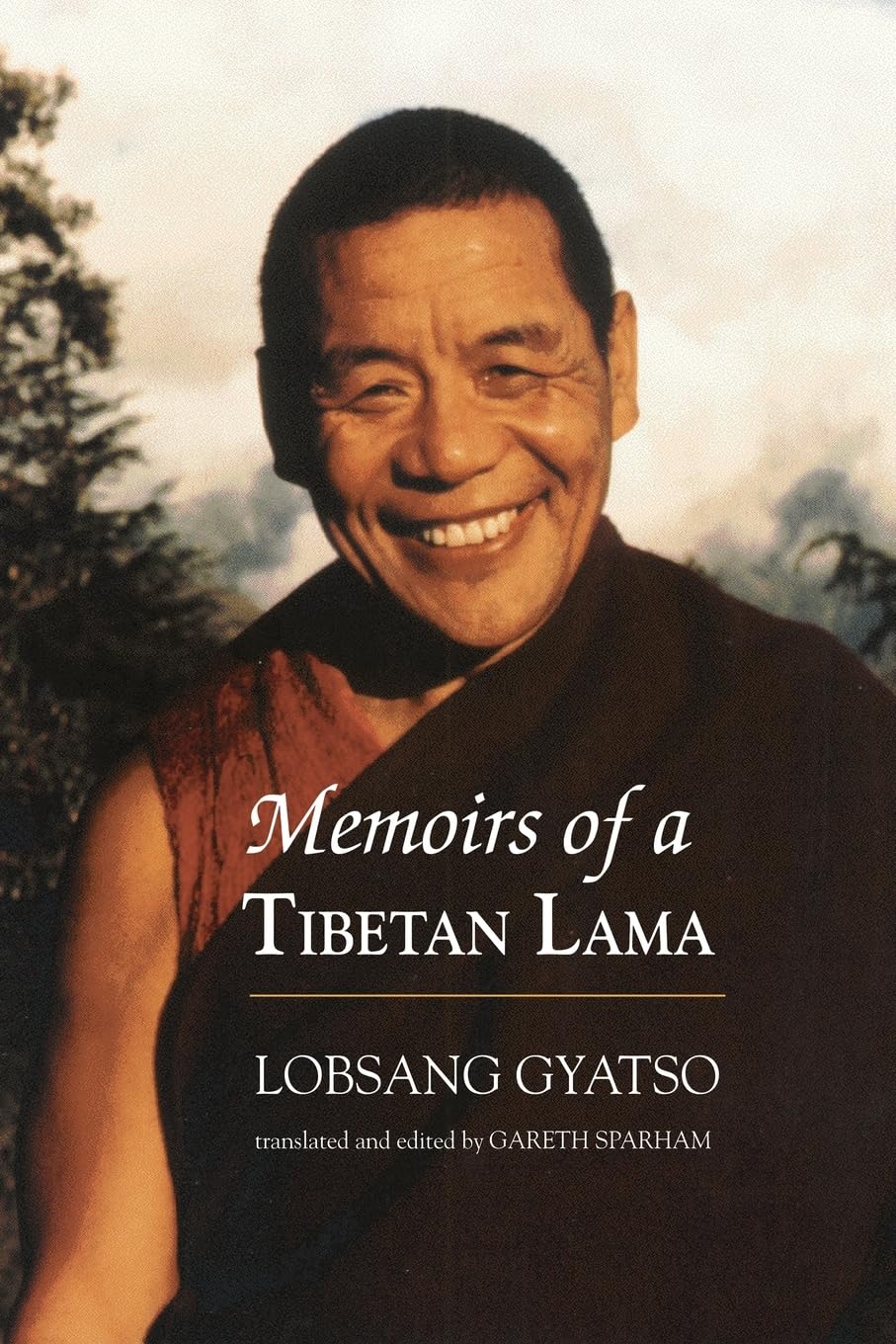
MEMOIRS OF A TIBETAN LAMA by Lobsang Gyatso, translated and edited by Gareth Sparham. (1998, Snow Lion Publications)
 Recommended by Ann Carlson
From the book jacket: A Tibetan patriot and unswerving follower of the Dalai Lama, Lobsang Gyatso emerges from these memoirs as a master storyteller, a fearless social critic, and a devoted Buddhist monk. With unusual wit and realism, he provides a picture of his country from the perspective of a common Tibetan, recounting his early life in Kham as a herder and a rambunctious young monk, his travels to Lhasa, his life in one of Tibet’s most famous monasteries, and his flight into exile. Outspoken and critical of both himself and his society, Lobsang Gyatso’s memoirs tell the story of his struggle for personal religious transformation and his fight to create a new vision for his country.
I so enjoyed reading this book. A master story-teller truly, and the translation is superb. I felt very much like I was with him, feeling what he felt, and seeing what he saw. Despite 332 fine-print pages, I read it all in two or three sittings because it was impossible to put down.
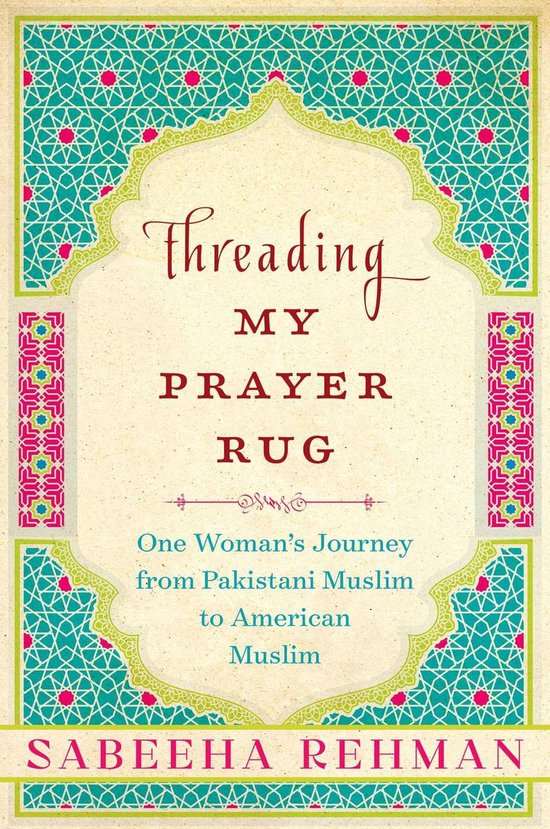
THREADING MY PRAYER RUG: ONE WOMAN'S JOURNEY FROM PAKISTANI MUSLIM TO AMERICAN MUSLIM by Sabeha Rehman. (2016, Arcade Publishing)
 Recommended by Ann Carlson
This book is a charming and compelling memoir of the immigrant experience of one woman: mother, grandmother, business woman, and passionate advocate for interfaith understanding. She recounts the daily struggles of balancing assimilation with preserving cultural heritage, overcoming ignorance and prejudice, encountering religious barriers and distortions of Islam, and raising Muslim children in an overwhelmingly Christian context. Her style is charming, intimate, and often very humorous.
I particularly enjoyed this book becasue it is easy to read, a compelling story, and very moving. She seems the kind of perosn one could spend all day talking to over coffee. Her experiences are so unlike mine in some ways, yet so very like mine in others.